Most divers treat these two as an either or choice. They are not. They are open at opposite times of year, they sit close enough to link up, and you can dive both in one voyage or in two trips within the same year. The published routes for Raja Ampat and Halmahera show where each one goes. This guide covers what the water is like, what you will actually see, which one fits your experience, and how to plan them together.
When Is Each Region Open for Diving
A Raja Ampat liveaboard sails from around October or November until April or May. Halmahera diving runs March to November. So there are only two short periods when both are open at the same time.
| Months | Raja Ampat | Halmahera |
|---|---|---|
| December to February | Open, peak season | Closed |
| March to April | Open, late season | Open, early season |
| May to September | Closed | Open, peak season |
| October to November | Open, early season | Open, late season |
Those two overlap windows matter, because they are the only time you can sail both regions in one trip. More on that further down.
Two Different Kinds of Water
What Raja Ampat Diving Feels Like
You dive in current here. Most sites are seamounts, pinnacles and sloping reefs, and the usual method is to hook in and stay put while the fish come to you. Do not expect crystal water. Visibility is average, and that is a good sign, because it means the water is full of plankton and nutrients. Temperature stays at 28 to 29 degrees all year.
The archipelago has 1,500 islands built around four big ones, Waigeo, Batanta, Salawati and Misool. Parts of it have been protected since 2007, which is a big reason the reefs still look the way they do. Plenty of sites are shallow, so snorkellers see much of the same thing.
What Halmahera Diving Feels Like
The big difference here is variety. One trip can include a wooden wreck, steep drop-offs, sharp seamounts and black sand muck diving. In most of Indonesia you would need two separate trips to get all of that. Visibility is good, and the water sits around 29 degrees.
The Patintie Strait, between Bacan and Halmahera, is the toughest and best part. Strong currents pull cold, nutrient rich water up from the deep and keep feeding the reef. Divers who know both places compare it to Komodo. Dive times there are planned carefully around the tides.
One more thing worth knowing. North Maluku has almost no dive facilities on land, and the main areas are hours of sailing apart. Everything is done from the boat, and you rarely share a site with anyone.
What Will You See Underwater
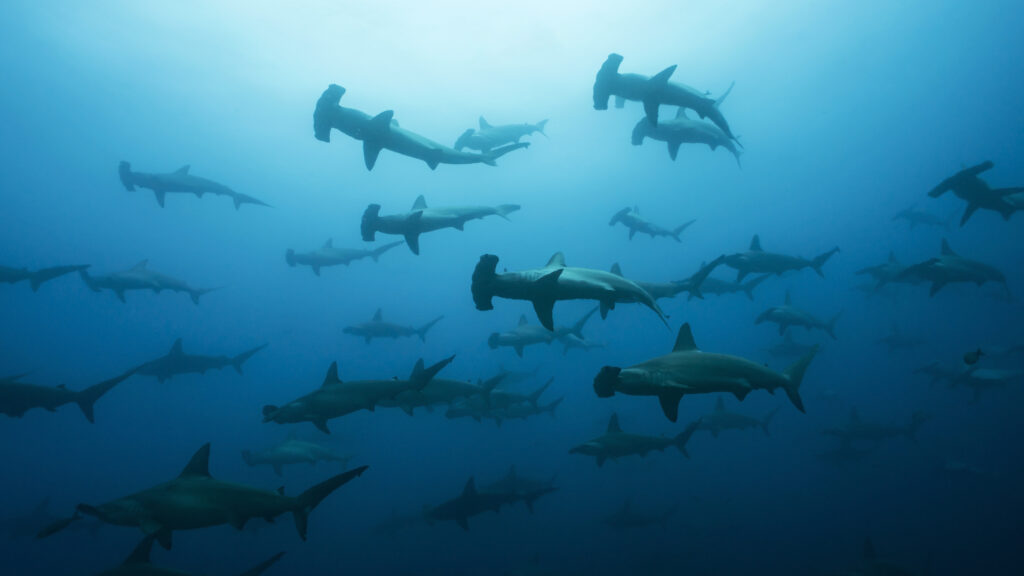
Both regions sit in the Coral Triangle, which holds 605 of the world’s 798 coral species, or 76 percent, according to the Coral Triangle Atlas. What changes is how that life is spread out.
| Area | Region | What you will find |
|---|---|---|
| Dampier Strait, Mioskon and Cape Kri | Raja Ampat | Yellow snapper, Napoleon wrasse, trevallies, big groupers, wobbegong sharks, pygmy seahorses, nudibranchs, yellow sweetlips, mackerel and reef sharks. Cape Kri has a recorded 374 species |
| Blue Magic | Raja Ampat | Yellowfin barracuda, yellow snapper, silver trevally, dogtooth tuna, giant trevally, blacktip and whitetip sharks, and mantas on a good day |
| Wayag and Kawe | Raja Ampat | Manta rays at cleaning stations, giant clams, old black coral bushes, Napoleon wrasse, wobbegong sharks hiding under boulders |
| Pienemu and Melissa Garden | Raja Ampat | Fusiliers, jackfish, batfish, giant trevally, snappers, rainbow runners, sweetlips, lionfish, plus crabs, shrimps and sea urchins along the wall |
| Misool | Raja Ampat | Gorgonian sea fans, turtles, reef sharks, barracuda, Bargibanti and Denise pygmy seahorses, a baby shark nursery near Pulau Yiliet, and anchovy shoals chased by predators at Pele |
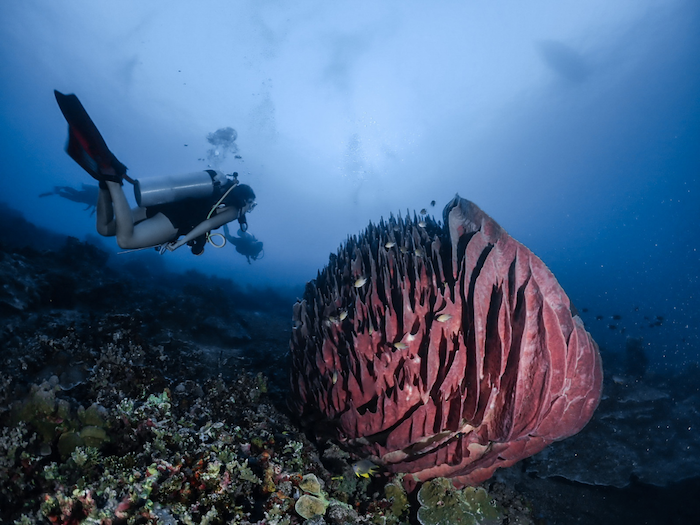
| Hiri, Tomajiko and Batu Hitam | Halmahera | Soft coral, sea fans, huge barrel sponges, blue spotted stingrays, schooling surgeonfish, fusiliers, bumphead parrotfish and Spanish mackerel |
| Patintie Strait | Halmahera | Untouched coral on ridges and canyons, clouds of anthias in the shallows, blacktip sharks, and mantas now and then |
| Pigaraja | Halmahera | Sweetlips, red snapper, trevallies, barracuda, blacktip reef sharks, and a 30 metre wooden copra wreck sitting at 20 to 30 metres |
| Babang | Halmahera | Black sand muck diving and night diving on sandy slopes |
| Goraichi Archipelago | Halmahera | Napoleon wrasse, fusiliers, trevallies, schooling surgeonfish, a tunnel through the rock at about five metres, and the occasional manta |
Two differences stand out. Raja Ampat packs more life into a single site, and Cape Kri is the proof. Halmahera gives you more types of diving in one trip, and it has three species of pygmy seahorse instead of two. The third one, Pontohi, is genuinely hard to find anywhere.
Matching the Region to Your Skill Level

| Your experience | Better fit | Why |
|---|---|---|
| Newly certified, under 30 dives | Raja Ampat | Mioskon, Wofoh and Keruo Channel are easy dives, and there is almost always a calmer site nearby when the current picks up. Village jetties like Saunderek are good shallow ground |
| 50 to 200 dives | Either, slight edge to Raja Ampat | Once your buoyancy and reef hook technique are solid, Blue Magic, Melissa Garden and the Misool pinnacles all open up. Halmahera works too, but the Patintie Strait asks more of you than the rest of the trip does |
| Experienced, or already dived Komodo | Halmahera | The Patintie Strait and Goraichi seamounts are properly demanding, the copra wreck adds a dive type Raja Ampat does not have, and Babang gives you macro most Raja Ampat trips never touch |
The one thing to avoid is starting your diving life in Halmahera. Easy sites do exist there, at Pillonga and around Ternate and Tidore, but the main areas are hours apart, so there is far less to switch to when conditions turn.
Can You Dive Both in One Trip
Yes, and it is a real published option rather than a theory. Raja Ampat trips can start and end in Ternate instead of Sorong, and there is a route that pairs Misool in southern Raja Ampat with Halmahera, heading west from the archipelago.
Three things have to line up. First, the dates. It has to be March, April, October or November, since those are the only months both are open. Second, the length. Raja Ampat trips run 7 to 12 days and Halmahera runs 8 to 12, so a combined route sits at the top of that range. Third, timing your booking, because these departures are rare rather than regular.
There is a catch. A combined trip covers Misool and Halmahera, but you give up northern Raja Ampat. That means no Wayag, no Kawe and no Dampier Strait.
For most people, two separate trips in one calendar year is the better plan. Do Halmahera between May and September while Raja Ampat is closed, then Raja Ampat between November and March. You get a full itinerary in each, roughly 20 to 26 dives in Halmahera and 20 to 25 on a 10 day Raja Ampat cruise, and you skip nothing. Book differently for each, though. Raja Ampat around Christmas and New Year often sells out a year ahead, while Halmahera usually still has space closer to your dates.
The two places answer different questions. One shows you how much life a single reef can hold. The other shows you what a reef looks like when almost no boats go there. Both are worth seeing, and the calendar means you do not have to pick.
If you are working out what to do next, the useful step is to look at how the routes are actually built across the Raja Ampat cruising region and the Halmahera cruising region. The shape of the route decides what you dive far more than the name of the destination does.
Frequently Asked Questions
Is Halmahera Diving Harder Than Raja Ampat
In places, yes. Both have strong current sites, but Raja Ampat gives you more calm alternatives when conditions turn. In Halmahera the areas are hours apart, so there is less to fall back on. Advanced certification and comfort with drift diving matter more there.
Which Has Better Macro Subjects
Halmahera, just slightly. Babang adds proper black sand muck and night diving on top of the reef macro you already get. Raja Ampat has excellent macro at Mioskon and around Misool, but muck diving is not part of a normal route.
Can Non Divers Join Either Trip
Yes, on both. Raja Ampat has kayaking, paddleboarding, village visits, lagoon walks and the climb up Mount Pindito, and many dive sites are shallow enough to snorkel. Halmahera adds land trips on Bacan, including Labuha market and the spice plantations, and the Goraichi islands work well for divers and non divers alike.
Do You Need Different Gear for Each
Not really. A three millimetre wetsuit covers both at 28 to 29 degrees, and a reef hook is useful in each. For Halmahera, bring a focus light and a macro setup for Babang, and buy any spare parts before you leave, because Ternate is not a place to resupply.