Halmahera is the largest island in North Maluku, sitting inside the Coral Triangle, yet it receives only a fraction of the divers who visit Raja Ampat, its far more famous neighbour to the east. Where Raja Ampat has become a well-mapped diving circuit, Halmahera diving is still pieced together from trader routes, mission anchorages, and the notes of one particular naturalist. Anyone planning a Halmahera diving trip will find routes and dive sites for the region mapped out in detail, but on paper the island still reads mostly as forest, strait, and volcano. This guide covers what makes Halmahera diving different from its neighbours, the sites worth building a Halmahera diving route around, when to go, and how to actually get there.
Where Halmahera Sits and Why It Stayed Quiet
Halmahera is a volcanic island shaped like a four armed starfish, the largest landmass in North Maluku province, ringed by a chain of smaller volcanic islands: Ternate, Tidore, Moti, and Makian, just off its western shore. Much of the interior is still primary forest, and the coastline alternates between mangrove estuary and black sand volcanic slope. The island also sits inside Wallacea, the transition zone between the Indomalayan and Australasian ecological realms, bounded by the Wallace Line on one side and the Lydekker Line on the other, which is part of why its plant and animal life reads differently from the rest of Indonesia. The same tectonic boundary feeds a chain of active volcanoes along the edge of the old Moluccan plate, several of which a liveaboard route will pass directly beneath.
The diving here stayed quiet for reasons that have nothing to do with the reefs themselves. From the 16th to the 19th century, North Maluku was the centre of the global spice trade, the original source of clove and nutmeg that drew Portuguese, Spanish, and Dutch fleets across the world, and for a period the Dutch East India Company enforced its monopoly on the islands with brutal control over cultivation and trade, including the deliberate treatment of nutmeg seeds so they could not be smuggled out and replanted elsewhere. That monopoly held for close to two centuries before it was eventually broken. Once it collapsed, the region fell outside the corridors of modern tourism development, and it has largely stayed there since.
“It was a sight to gaze at for hours.” Alfred Russel Wallace, The Malay Archipelago, 1869
Wallace is the strongest asset the region has for establishing real authority, because the connection is documented rather than decorative. According to the Alfred Russel Wallace Website, it was during a bout of fever in the village of Dodinga on Halmahera, in February 1858, that the idea of natural selection came to Wallace in full. He wrote the essay up over the following evenings and sent it on to Charles Darwin, the paper that is widely credited with pushing Darwin toward publishing On the Origin of Species. That puts Halmahera at the origin point of one of science’s defining ideas, long before anyone had dived its reefs.
What Makes Halmahera Diving Different
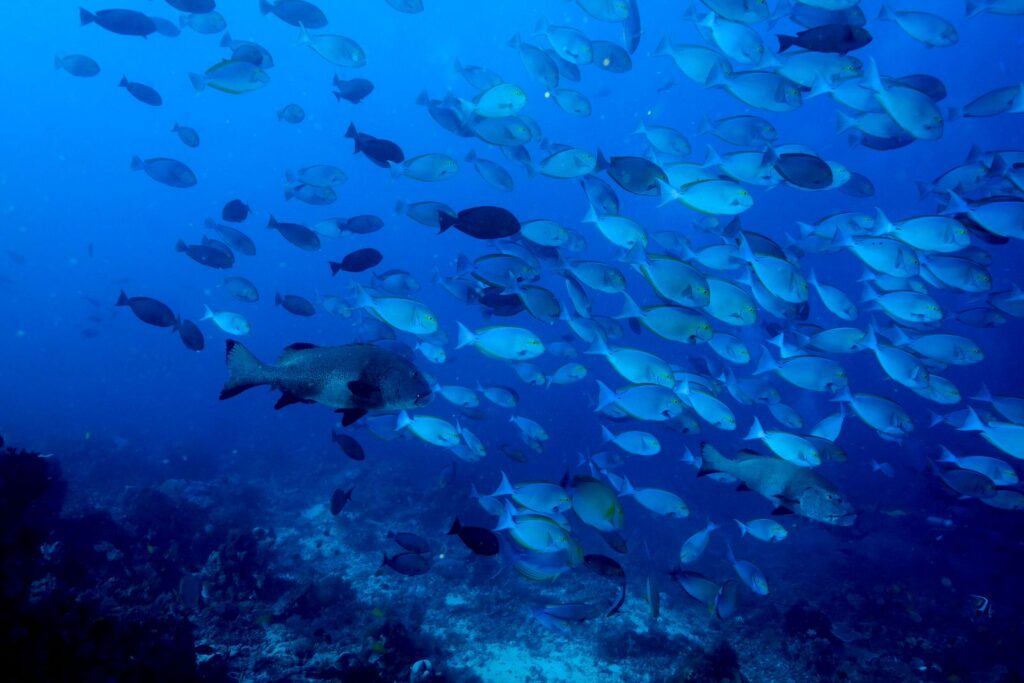
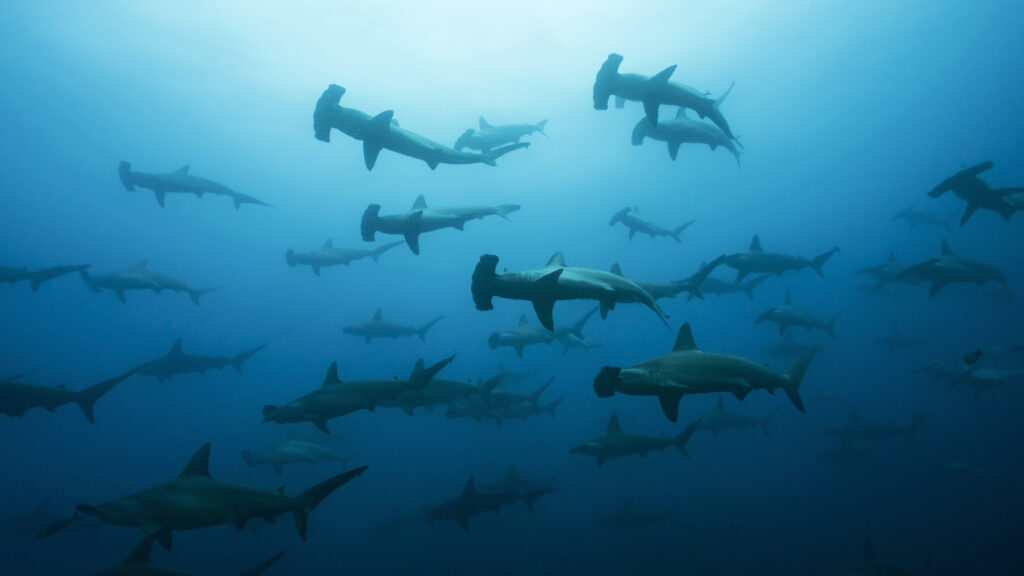
Halmahera diving is defined less by any single site than by the range packed into one itinerary. A single trip can move from wrecks to steep drop-offs to sharply angled seamounts without a long transit between them, with water holding around 29 degrees Celsius year-round. Currents at certain sites run strong enough to demand a drift-diving mindset rather than a leisurely one, and that current is exactly what feeds the region’s density of life. The more distinctive trait, though, is the pairing of large pelagics with high-value macro in the same waters: trevally and reef sharks passing through the same stretch of reef where a diver might spend twenty minutes hunting for a single pygmy seahorse. Halmahera is one of the few places where all three recognised pygmy seahorse species turn up. Bargibanti and Denise are common talking points across the Coral Triangle, but a confirmed Pontohi sighting is genuinely rare, and it signals a site, and a guide, worth paying attention to.
The wider context helps explain why. According to the Coral Triangle Atlas, the Coral Triangle holds 605 of the world’s 798 known coral species, or roughly 76 percent. The World Economic Forum notes that this same stretch of ocean covers just 1.5 percent of the planet’s total ocean area, yet contains 30 percent of the world’s coral reefs and 37 percent of its coral reef fish species. Halmahera sits inside that footprint, largely undived.
The Signature Sites, North to South, and Who They Suit
A Halmahera itinerary tends to follow the coastline rather than jump between disconnected regions, moving from the small islands off the west coast down through the straits and seamounts further south. Each area asks for a different kind of diving, and a different level of experience, which is part of what makes the route worth the travel time.
| Area | Sites | What defines it | Best suited for |
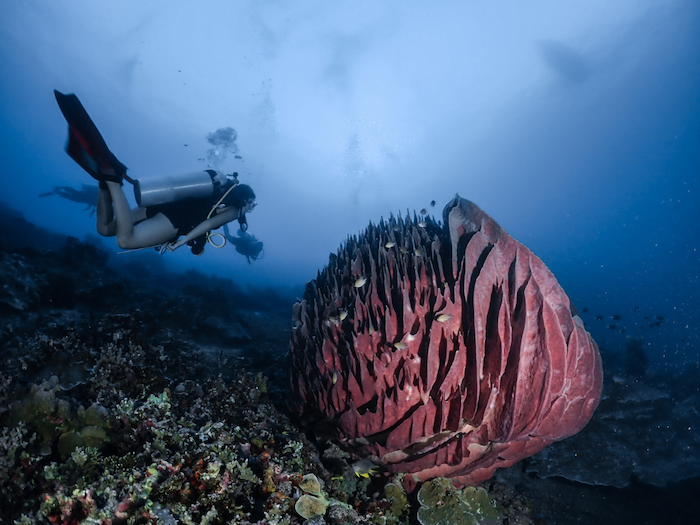
| Hiri and Tidore | Tomajiko, Batu Hitam | Drop-off with barrel sponges, bumphead parrotfish, Spanish mackerel | Beginner to intermediate, mild current, good first days on the boat |
| Patintie Strait | Tobias Point, Proco Channel, Batu Jabu, Selat Kecil | Nutrient-driven ridges and canyons, anthias clouds, untouched coral | Advanced, strong and sometimes unpredictable current, drift-diving experience expected |
| Pigaraja | The Wall, The Ridge, Copra Boat Wreck | Sweetlips, trevallies, blacktip sharks, a 30 metre wooden wreck at 20 to 30 metres | Intermediate to advanced, wreck penetration not required but depth control matters |
| Babang | Sandy slopes | Muck diving and night diving, critter territory | Beginner to intermediate, calm conditions, good buoyancy for close macro work |
| Goraichi | Pintu Manis, Tamo-Tamo | Napoleon wrasse, schooling surgeonfish, a shallow tunnel through rock | Intermediate to advanced, current-dependent site selection each morning |
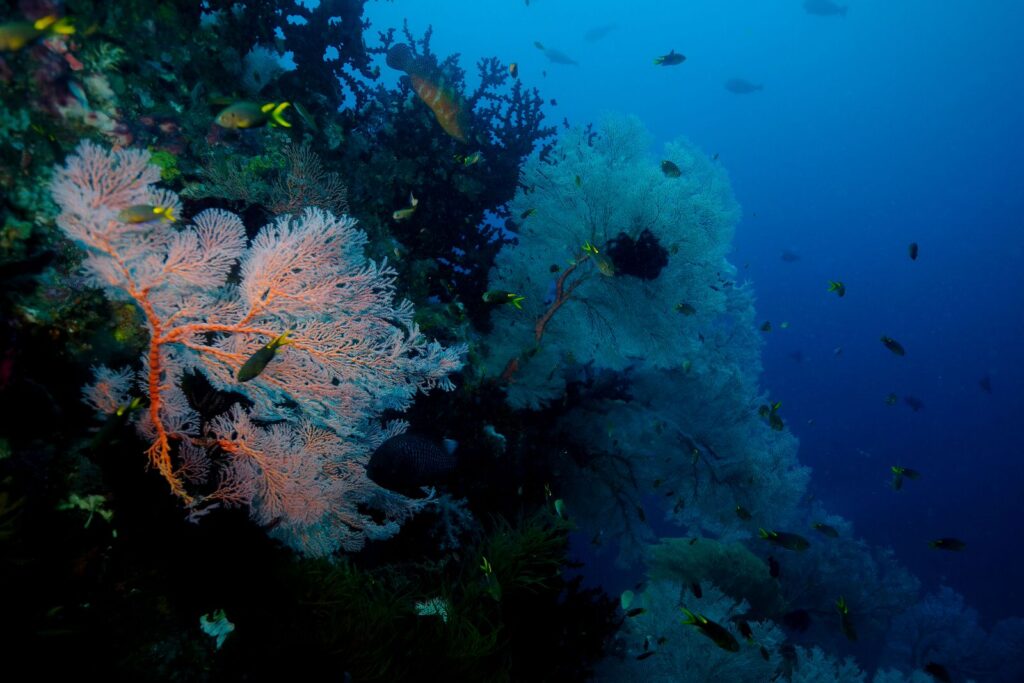
Patintie Strait diving is usually the centrepiece of the route, and crews who have run both often describe it as North Maluku’s answer to Komodo: the same strong currents, the same coral walls built up in bands of colour, blue in one stretch and deep pink-red in the next. The channel funnels nutrient-rich water past a set of ridges and canyons, and the resulting anthias clouds and untouched coral cover are hard to match elsewhere in the region, along with schools of bumphead parrotfish and sweetlips and the occasional pass from a giant Napoleon wrasse. It is also where the trip asks the most of a diver’s current experience. Goraichi, further south, does something different: a cluster of around twenty pinnacles rising from deep water, comparable in scale to Komodo’s Batu Bolong but larger, with visibility that regularly opens up past 30 metres. The current here runs strong enough that some vessels can’t anchor at all, so it isn’t a beginner’s stop, but on the sites where conditions allow it, the shallow tunnel cut through rock and the schooling surgeonfish give Goraichi its own identity rather than just another wall.
A few areas sit outside the core north to south route but come up often enough in trip planning to name directly:
- Weda Bay, on Halmahera’s east coast, is calmer water with hardly any current, good for beginners and snorkellers, and includes a Japanese WWII shipwreck for those who want it.
- Widi Islands, a cluster of around 99 small islands south of Halmahera, is a newer addition to the region’s diving map, known for clear water and largely untouched coral.
- Morotai, off Halmahera’s northern tip, holds WWII wrecks from the Pacific theatre, ships and aircraft now grown over with coral, and is usually reached via Ternate on a dedicated leg of a longer itinerary.
When Should You Plan a Halmahera Trip
The Halmahera dive season runs from March to November, which is the inverse of the Raja Ampat window, a fact that matters more for trip planning than almost anything else in this guide, since it means the two regions can, in principle, be split across a single travel year rather than competing for the same weeks. A typical Halmahera liveaboard voyage runs 8 to 12 days and covers somewhere between 20 and 26 dives, enough time to move from the reefs off Hiri and Tidore, through Patintie Strait, and as far south as Goraichi without rushing any one stretch.
Getting to Ternate and Onto the Boat
Ternate diving trips all funnel through the same point of arrival: Sultan Babullah Airport on Ternate island, served by major Indonesian carriers connecting through Jakarta and Makassar. From there, transfer to the vessel typically happens on arrival day, since North Maluku has almost no dive infrastructure on shore, and there is no strip of dive resorts to fall back on if the boat schedule shifts. That absence is the practical reason a liveaboard isn’t a preference here so much as the only way most of the region’s sites are reachable at all. The vessel’s range, more than anything else, is what decides whether Patintie Strait and Goraichi can both fit into a single trip.
Practical Information for Planning
A few logistical details tend to come up once a trip moves from research into booking.
| What you need to know | Details |
| Estimated cost | Halmahera liveaboard rates generally fall somewhere between roughly USD 400 and 900 per person per night, depending on vessel category, cabin type, and season. Confirm current rates directly with an operator, since they shift with fuel costs and vessel class. |
| Best months within the season | The season runs March to November. Within that window, October and November are commonly cited by operators as the period with the calmest seas and the best visibility, while June to September can bring stronger winds. |
| Nearest hyperbaric chamber | Manado, on North Sulawesi, is the nearest chamber most operators reference for this region, with further options in Makassar, Bali, and Jakarta. Full dive insurance covering evacuation and chamber treatment is essential given the distances involved. |
| Flight time from Jakarta | Direct flights to Ternate (Sultan Babullah Airport, TTE) run around 3 hours 40 minutes to 3 hours 45 minutes on carriers including Garuda Indonesia, Batik Air, Super Air Jet, and Sriwijaya Air. |
| Nitrox and certification | Nitrox is available on most Halmahera liveaboards on request, either included or as a paid add-on; confirm with your operator ahead of departure. Open Water certification covers the sheltered sites, but Advanced Open Water or equivalent current experience is recommended for Patintie Strait and Goraichi. |
Reefs Worth the Extra Days: Is Halmahera Your Next Trip?
Halmahera asks for more travel time and offers fewer comforts than the established diving destinations in eastern Indonesia: longer transits, no resort fallback, a season that doesn’t always align with everyone else’s calendar. That trade-off is also the reason its reefs remain largely intact, with pygmy seahorse populations and coral cover that haven’t been shaped by two decades of dive tourism. For divers weighing where to spend a longer Indonesian trip, the Halmahera destination page sets out how a Halmahera route compares against a Raja Ampat one in terms of structure and pacing, and how to build one around your own dates. Check current departures and start planning your Halmahera liveaboard trip today.
Frequently Asked Questions
Is Halmahera Diving Suitable for Beginners?
Some sites are, but not the whole itinerary. Sheltered areas around Hiri and Tidore, and the calmer water in Weda Bay, work well for less experienced divers, while sites in Patintie Strait and around Goraichi involve currents that call for a drift-diving background. Most operators grade sites by day so a mixed-level group can dive together, but Halmahera diving as a whole rewards divers who are already comfortable in moving water.
Can You Combine Halmahera with Raja Ampat?
Yes, and the opposing seasons make it a natural pairing rather than a compromise. Because the Halmahera season runs March to November while Raja Ampat’s peak sits in the opposite half of the year, a longer North Maluku trip can be built around whichever region is in season, with Ternate and Sorong both reachable through Jakarta or Makassar connections.
Are There Dive Resorts on Halmahera Island?
A few, but only in specific pockets. Weda Reef & Rainforest Resort sits on the east coast in Weda Bay, and a small handful of resorts, including Sali Bay Resort, cluster around Bacan near the Patintie Strait. Outside these pockets, North Maluku has almost no shore-based dive infrastructure, which is why nearly all diving in the wider region still happens from a liveaboard rather than a land-based resort. Worth planning around rather than assuming shore accommodation will be available everywhere.
What Should You Pack for a Remote Voyage?
Beyond a standard dive kit, pack for a region with limited resupply: extra reef-safe sunscreen, any specific medication, cash in small denominations for village stops, and a dive computer with a spare battery or backup unit, since replacements won’t be available mid-trip. A 3mm wetsuit generally covers the water temperature, though divers who run cold may prefer a 5mm for repeated dives in Patintie Strait’s stronger currents.